A tree came down on your East Tennessee house. Now what?
Mountain-wave wind, summer storms, ice and saturated ground all bring trees down around Knoxville. When one lands on the house, safety, power lines and stopping the rain come first.
Last reviewed against official sources. General information, not insurance or legal advice.
Get everyone out of the damaged part of the house and away from wires, report downed lines to KUB or your local power company, and photograph everything. Have a tree service remove the tree and a roofer tarp the opening, then report the claim. Storm damage from a falling tree is generally covered by your own homeowners policy, even if the tree was your neighbor's.
The first hour
- Move everyone away from rooms under the tree; it can still shift.
- Treat any wire touching the tree as live. Report it to Knoxville Utilities Board (KUB) or your local power company.
- If it is safe, shut off water or power to the damaged area.
- Photograph the tree on the house from outside, then the damage inside.
- Report the claim and ask the insurer what they need before removal.
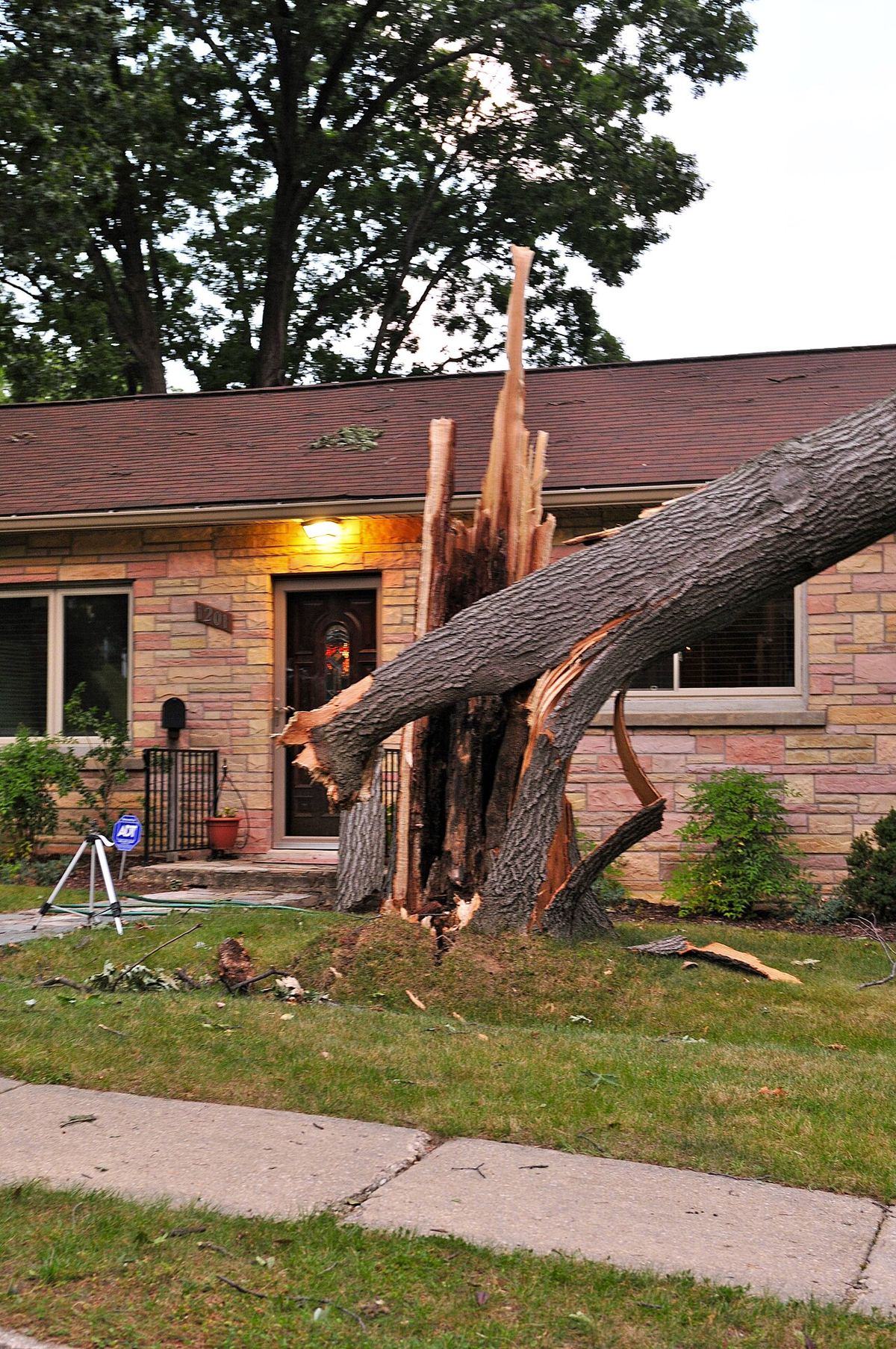
What brings trees down here
Of the 893 thunderstorm wind reports NOAA lists for Knox, Blount, Sevier, Anderson and Loudon counties from 2006 through 2025, 789 mention trees, and 54 of those also mention homes or houses. Cool-season mountain-wave winds bring down trees too: on January 12, 2024, NOAA recorded trees blown down across Knox County and around Cades Cove. When Helene arrived on September 27, 2024, Knox County 911 logged about 100 calls for fallen trees, according to NOAA, after days of rain had soaked the ground.
Ice adds weight. NOAA lists ice storms in the area in December 2010, March 2014 and February 2015, when coated limbs broke and fell.
Knoxville's Sequoyah Hills, Fourth and Gill and Old North neighborhoods, and wooded lots in Sevier and Blount counties, have big trees close to houses. Mountain-wave winds and ice storms both bring them down.
Who pays?
Short answer: usually your own homeowners insurer, minus your deductible, regardless of whose tree it was.
- Your policy generally covers repairs to the house and removing the tree from it.
- If the tree was obviously dead and the owner knew it, your insurer may seek repayment from that owner's insurer.
- Trees that fell without hitting a building often have limited coverage. Many standard forms cap removal, commonly at $1,000 per loss and $500 per tree, and only in certain cases. Read your debris removal section.
- Cars are covered under auto comprehensive coverage, if you carry it.
Cabins and rentals
A tree on an empty cabin may not be noticed for days. If you own a rental in Sevier or Blount County, arrange for someone to check it after high wind warnings or ice. Ask your insurer whether the cabin is on a homeowners, dwelling or commercial policy, because coverage for lost rental income and tree removal differs.
Getting the tree off
Hire a tree service with liability and workers' compensation insurance and get the price in writing. Steep lots often need a crane or bucket truck. Have a roofer tarp the opening as soon as the tree is off; see emergency tarping.
What should be in the repair estimate
Look for framing repair (rafters or trusses), decking, underlayment and roofing for the damaged area, plus interior drywall, insulation and paint, and gutters. If a licensed contractor is needed for the size of the job, check the license with the Tennessee Board for Licensing Contractors.
Reducing the risk
- Have an arborist check large trees near the house, especially on slopes where roots are shallow.
- Remove dead limbs over the roof.
- Keep dated photos of the trees and roof.
Trees on slopes and ridges
Many homes in West Knoxville, South Knoxville, Maryville and the foothills sit on hillsides with large trees uphill of the house. Trees on slopes can have shallower or one-sided roots, and soaked ground after heavy rain, as with Helene, makes them easier to topple. Ask an arborist to look at big trees upslope of the house, especially any that lean toward it or have exposed roots after erosion.
Ice and limbs
A quarter to half an inch of ice can add a lot of weight to branches. In the February 2015 ice storm, NOAA recorded up to half an inch of ice in Loudon County, with trees and power lines down in Lenoir City. During an ice storm, stay out of rooms under large limbs and park cars away from trees.
Cars, fences and outbuildings
A tree that hits a fence or shed usually falls under your policy's other structures coverage. Cars are covered under auto comprehensive coverage. Photograph each one separately.
Frequently asked questions
My neighbor's tree fell on my house. Who pays?
Usually your own homeowners insurer. If the tree was clearly dead and the neighbor was warned, your insurer may recover from the neighbor's insurer.
Is removal covered if the tree missed the house?
Sometimes, with limits. Many standard forms cover it only in certain cases, often up to about $1,000 per loss and $500 per tree.
Should I wait for the adjuster before removing the tree?
No, if waiting would cause more damage. Photograph everything, tell the insurer, then have the tree removed and the roof tarped. Keep the invoices.
How long do I have to sue if the claim is denied?
Check your policy's suit limitation clause. Many Tennessee policies require a suit within one year of the loss.
Policies vary. Check your own policy and ask your insurer or agent about anything that affects your claim. Laws and rules can change; this page reflects official sources as of October 29, 2026. KnoxvilleRoof.com is not a contractor, insurer, adjuster or law firm.
Find local help
Roofing contractors serving Knoxville and East Tennessee · Ask for storm help · Counties and towns