Hail hit Knoxville. How can you tell if your roof is damaged?
How to tell if hail damaged your roof in Knoxville, Maryville, Oak Ridge, Sevierville or Lenoir City: shingles, metal, slate and flat roofs, gutters and vents, the sizes that matter, and damage that shows up later.
Last reviewed against official sources. General information, not insurance or legal advice.
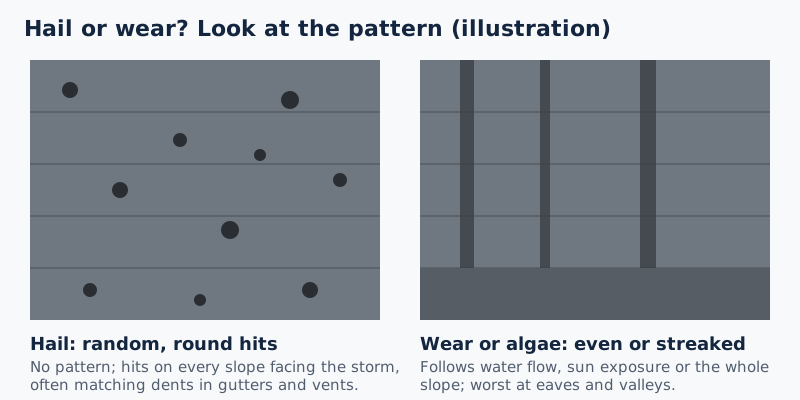
Hail around Knoxville is often large, so check the house soon after the storm. Look for fresh dents in gutters, downspouts, vents, metal roof panels and heat pump fins, then for scattered round spots on the shingles where granules are gone or the shingle feels soft. A random pattern on the storm-facing slopes means hail; even wear across every slope means age.
Hail around Knoxville tends to be big when it comes. Of the 270 hail reports in Knox, Blount, Sevier, Anderson and Loudon counties from 2006 through 2025, 217 were 1 inch (quarter size) or larger, according to the NOAA Storm Events Database. Hail 2.75 inches across, about baseball size, fell in Knoxville on April 27, 2011, near Highland Park in Loudon County on June 7, 2008, and in Gatlinburg on April 26, 2012.
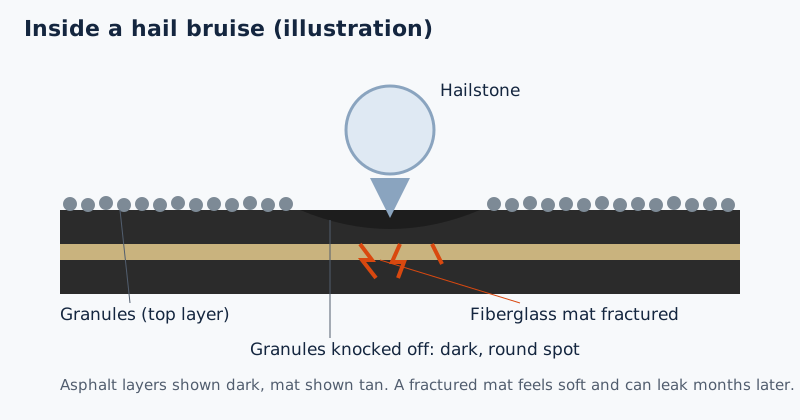
What does big hail do to shingles?
Short answer: it knocks the granules off a round patch of the shingle and, at larger sizes, fractures the mat beneath. Knoxville-area hail is large often enough that cracked and punctured shingles, not just bruises, show up after the worst storms.
Most homes in Knox, Blount, Anderson and Loudon counties have asphalt shingles: three-tab on many older houses in Fountain City, Bearden and Oak Ridge, and architectural shingles in newer Farragut, Hardin Valley, Maryville and Lenoir City subdivisions. An inspector looks for:
- Fresh, round bare spots with black asphalt showing.
- Soft bruises that give under light pressure.
- Cracks and punctures from larger stones, especially on older shingles.
- Damaged ridge and hip caps, which take direct hits.
- Dents in nearby soft metal that confirm the storm hit that side of the house.
Hail or just an old roof?
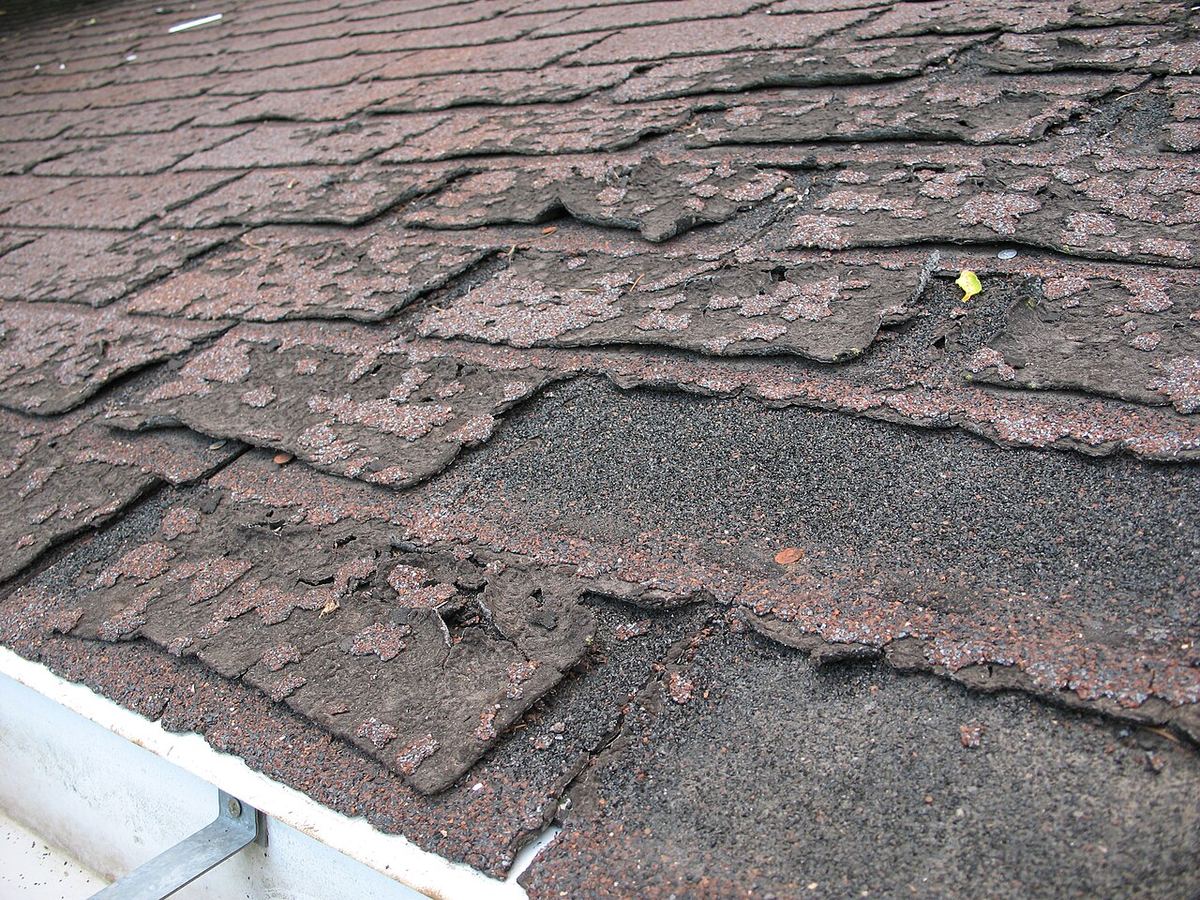
Short answer: hail marks are random, round and new; wear is even, follows water or foot traffic, or matches the roof's age.
| Sign | Points to hail | Points to age or something else |
|---|---|---|
| Dark spots | Scattered at random, round, matching soft-metal dents | Blistering spread evenly; scuffs where people walked |
| Cracks | Star or crescent cracks at an impact point | Long, straight cracks; splits along nail lines |
| Metal roof marks | Round dents, all similar, on the side that faced the storm | Oil canning (waviness) from installation; rust at cut edges or fasteners |
| Slate | Fresh breaks with clean edges | Old breaks, slipped slates and corroded nails |
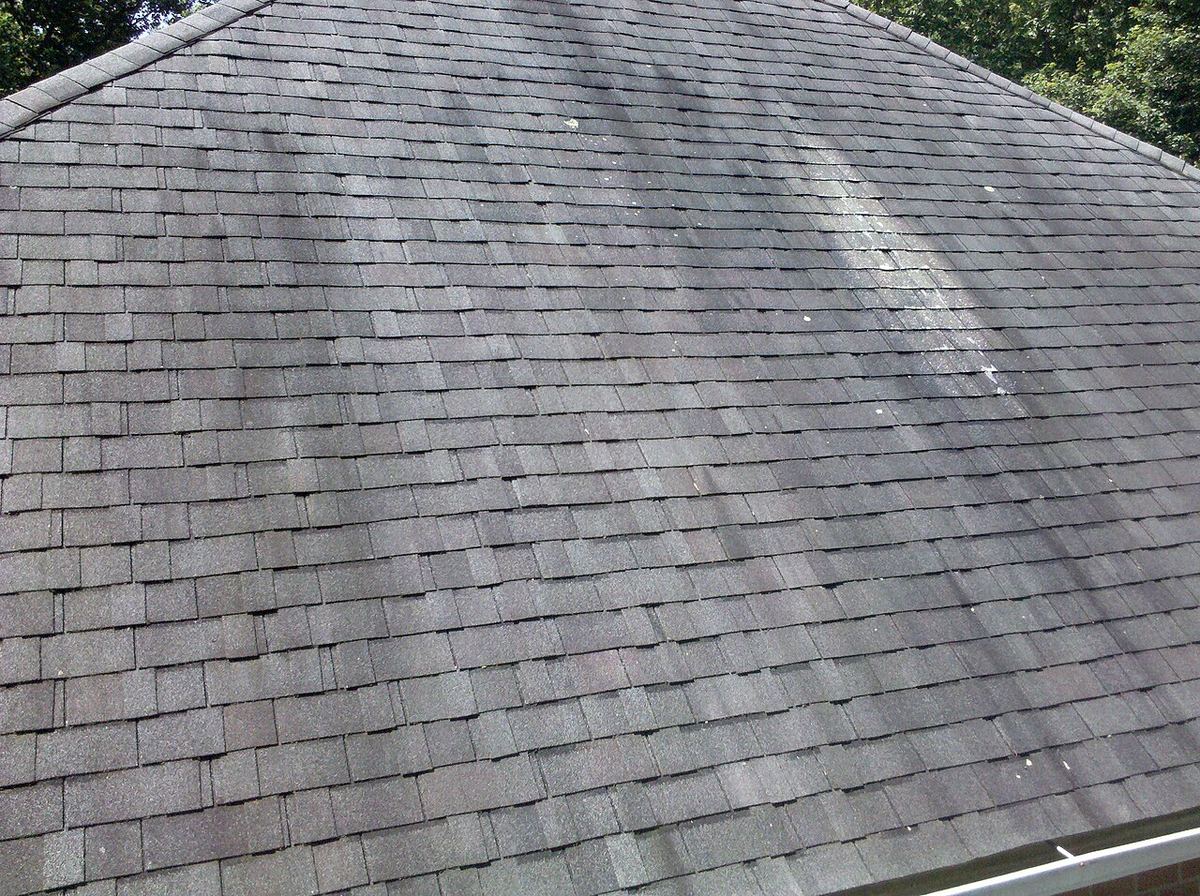
| Streaks | Not hail | Algae and moss on shaded slopes, common in wooded lots |
Take a set of roof photos every spring before storm season. They are the simplest answer to "that damage was already there."
Check the metal first
Short answer: gutters, downspouts, vents, flashing, heat pump fins and metal roofs dent at smaller hail sizes than shingles break, so they tell you hail fell and which way it came.
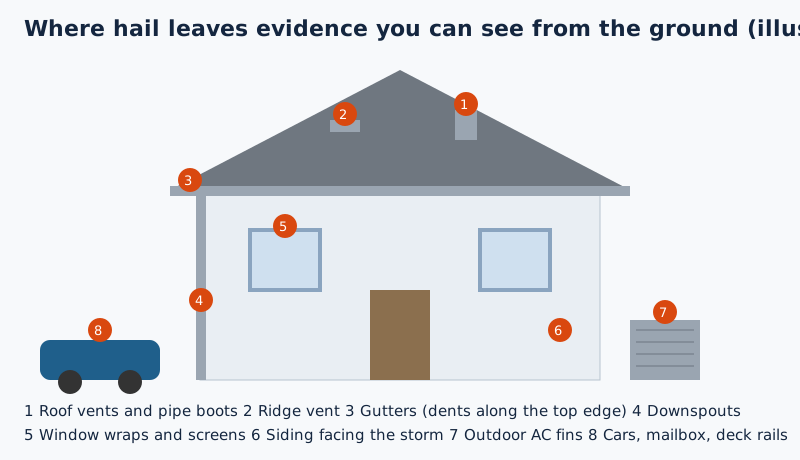
- Gutters and downspouts: a row of dents along the front lip.
- Roof vents: dented metal or cracked plastic.
- Heat pumps: fins crushed on one side.
- Metal roofs, carports and barns: dents that show up when the sun is low.
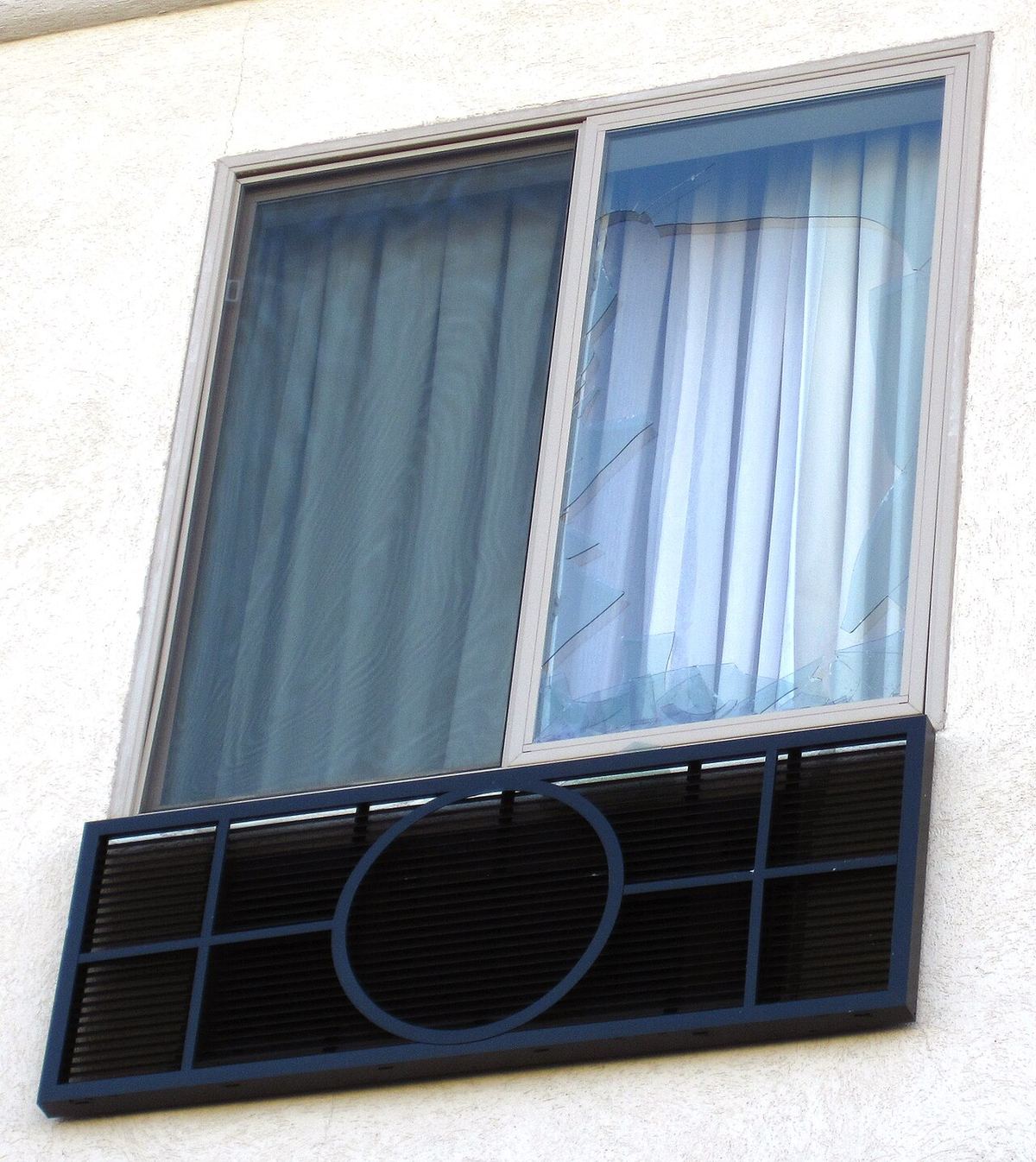
- Screens, siding and trim: holes, cracks and chips facing the storm.
- Vehicles and boats: dents that help show stone size.
Dents in metal do not prove the shingles are damaged, but they are a strong reason to have the roof inspected.
How big is big enough?
Short answer: about 1 inch (quarter size) is where shingle damage usually starts, and the National Weather Service calls that size severe. In the Knoxville area, most reported hail is at least that big.
Of the 270 hail reports in the five counties from 2006 through 2025, 217 were 1 inch or larger, according to NOAA. Other things that change the damage:
- Roof age and condition.
- Wind: strong storms drive hail into one face of the house.
- Hardness: dense, clear stones hit harder.
- Impact-rated shingles: UL 2218 Class 4 products survived a 2-inch steel ball test in the lab. Ask your insurer whether it offers a discount.
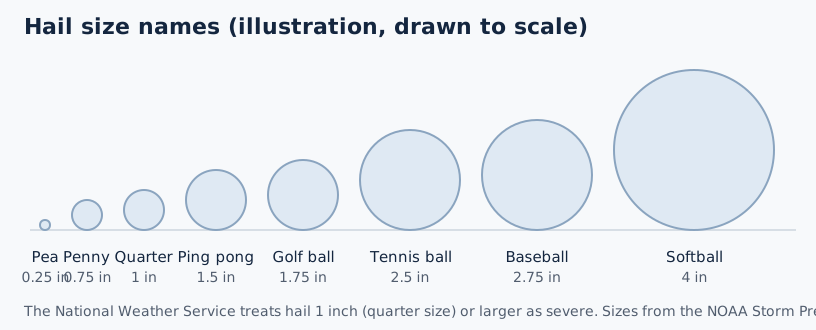
See the hail size chart and the East Tennessee hail history.
Metal, slate and low-slope roofs
Metal roofs on cabins and farm buildings
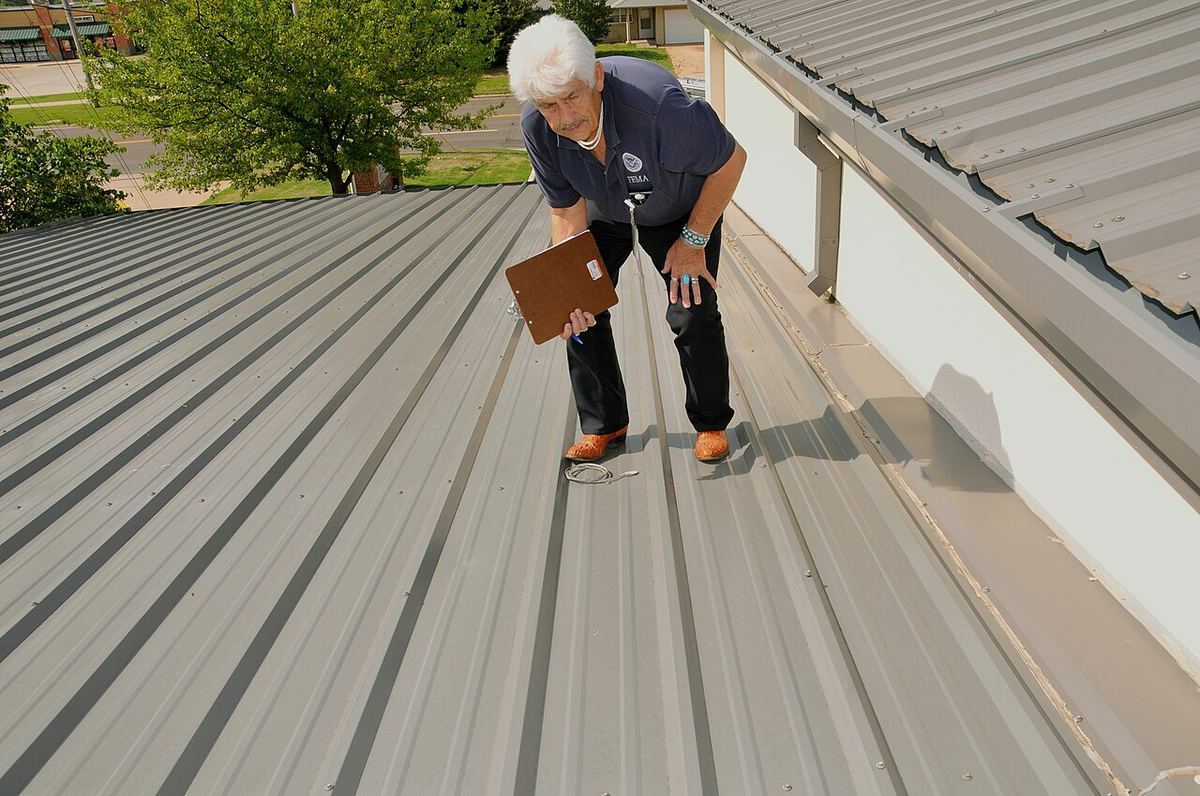
Standing-seam and exposed-fastener metal is common on Sevier County cabins, foothill homes and barns. Hail usually dents metal rather than opening it. Some policies, especially on metal roofs, include a cosmetic damage exclusion; if yours does, dents that do not let water in may not be paid. Check exposed-fastener roofs for loosened or damaged screws and washers, which can leak.
Slate
Some older homes in Sequoyah Hills, Fourth and Gill, and Old North Knoxville have slate. Hail breaks slate, and so does careless walking. Ask for someone experienced with slate.
Wood shakes
Fresh splits are light-colored with sharp edges; old splits are gray.
Low-slope roofs
Additions, porches and many commercial buildings have membranes that hail can puncture, sometimes without obvious marks on top.
Functional or cosmetic?
Short answer: functional damage affects how the roof sheds water or how long it lasts; cosmetic damage affects only how it looks.
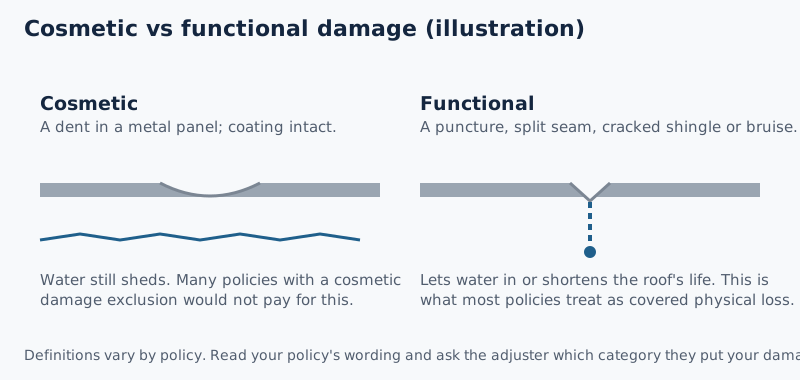
If an adjuster calls your damage cosmetic, ask for the policy wording in writing. If part of the roof is replaced and the new material will not match, Tennessee's matching rule may apply; see reading your policy.
Can damage show up months later?
Short answer: yes. Bruised shingles lose granules over time and can start leaking after heavy rain, or after snow and ice sit on the roof in winter.
An April hailstorm can become a January leak. Write down hail dates and report damage promptly. In Tennessee, also note your policy's suit limitation, which can be as short as one year.
What is different about East Tennessee roofs?
Metal roofs are common on Sevier County cabins and in the foothills, where hail dents may be treated as cosmetic under some policies. Knoxville's Fourth and Gill, Old North and Sequoyah Hills neighborhoods have older homes, some with slate, and Oak Ridge has many 1940s and 1950s houses whose roof age and layers matter. Tennessee's matching rule requires replacement items to give a reasonably uniform appearance, which can matter when a hail repair would leave a patchwork roof.
Stay off the roof
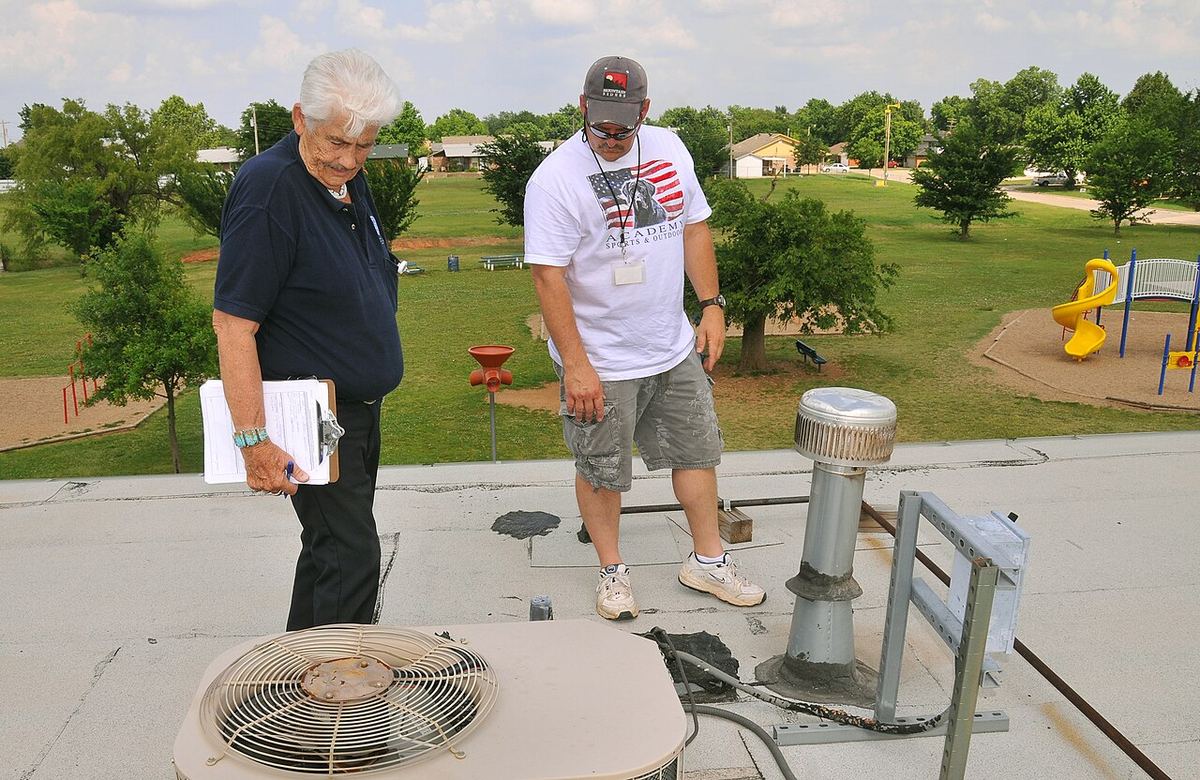
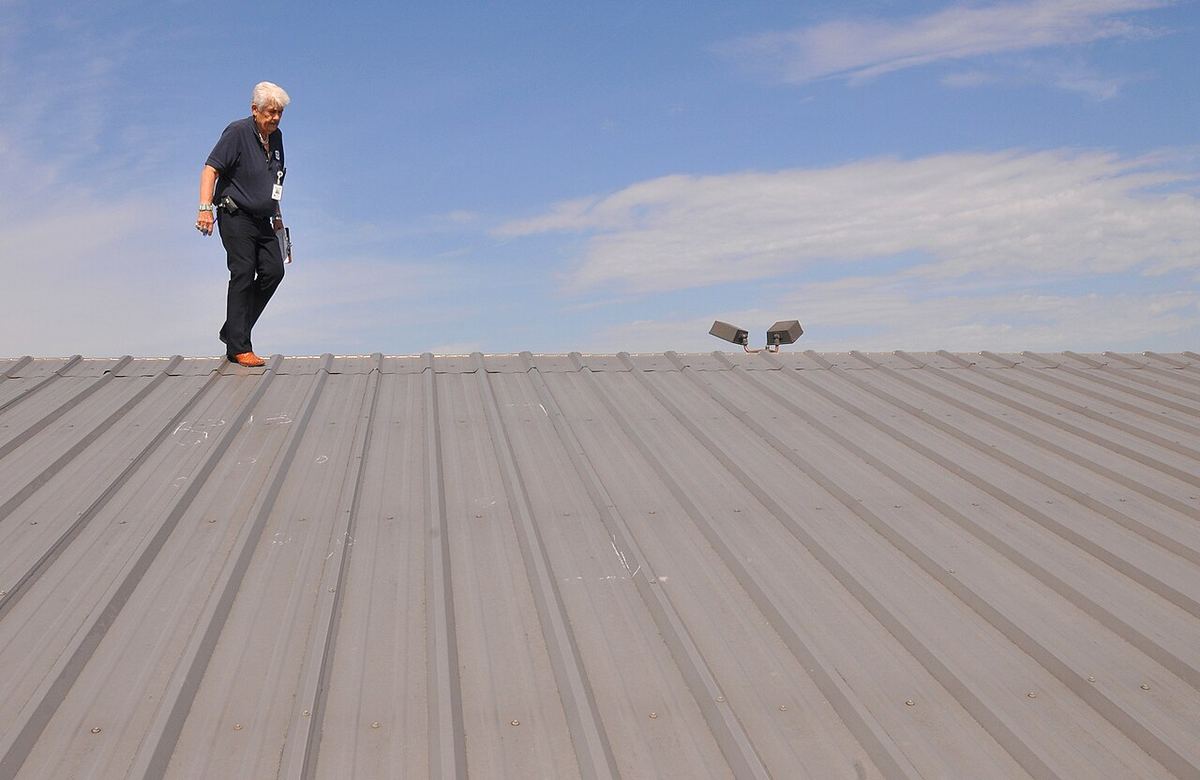
Use binoculars or a phone zoom from the ground. Steep foothill roofs and metal roofs are especially dangerous to walk, wet or dry. Leave climbing to a roofer or the adjuster.
Where to go next
How large does hail get here?
Large hail needs a strong thunderstorm updraft to hold stones aloft while they grow, and spring storms in the Tennessee Valley can have them. The record shows it: most hail reported in these five counties since 2006 was severe-size, and baseball-size hail has been reported in Knoxville, Gatlinburg and Loudon County. The April 27, 2011 outbreak brought 2.75-inch hail to Knoxville on the same day an EF4 tornado struck Blount County.
Class 4 impact-resistant shingles
Class 4 is the top rating in the UL 2218 test, in which a 2-inch steel ball is dropped on the shingle. These shingles are more resistant to hail but not hail-proof. If you re-roof in an area that gets spring hail, ask your insurer whether it offers a discount, and keep the product information for your records.
Warranties don't cover hail
Shingle and metal roof warranties usually cover manufacturing defects, not storm damage. A hail-damaged roof is an insurance claim.
Soft metal clues
From the ground, look for round dents in gutters, downspouts, mailboxes, grills and AC fins, and spots where hail knocked dirt or oxidation off surfaces. These often show hail size and direction better than the shingles do from below.
Skylights, solar panels and screens
Check skylight domes and glass for cracks, solar panels for chipped glass or bent frames, and porch screens for holes. Solar panels may have their own warranty and coverage, so photograph them separately and ask your insurer how they're listed.
Hail and wind on the same day
Spring storms in the valley often bring hail and strong gusts together. Hail leaves scattered round marks, while wind tears and folds shingles at edges and corners. Photograph both and make sure the estimate covers both. See wind damage in East Tennessee.
How big has hail been in each Knoxville and East Tennessee county?
Short answer: since 2006, every county this site covers has had hail of at least 1.75 inches, large enough to damage many roofs. The table shows the largest hail on record in each county (the most recent date if tied) and how many reports were 1 inch or larger.
| County | Largest hail | Where and when | Reports 1 inch or larger |
|---|---|---|---|
| Knox County | 2.75 in (baseball) | Knoxville, April 27, 2011 | 74 |
| Sevier County | 2.75 in (baseball) | Gatlinburg, April 26, 2012 | 40 |
| Loudon County | 2.75 in (baseball) | Highland Park, June 7, 2008 | 24 |
| Blount County | 2.00 in (hen egg) | Tallassee, May 8, 2025 | 48 |
| Anderson County | 1.75 in (golf ball) | Oak Ridge, April 10, 2025 | 31 |
Source: NOAA Storm Events Database, 2006–2025. See the full local hail history.
East Tennessee hail check (printable)
- When did the hail fall, and how big was the largest stone? Photograph a few beside a coin or ruler.
- Walk around the house: which side has dented gutters, torn screens or chipped trim?
- Heat pump: are fins flattened on one side?
- Metal roof, porch roof, barn or carport: new dents visible in low sun?
- Box vents, pipe boots and skylight frames: dented, cracked or split?
- Granules collecting at downspout outlets?
- Shingle slopes, checked from the ground with binoculars: dark round marks or cracked tabs?
- Cars, boats, the grill and the mailbox: matching dents?
- If you own a cabin in Sevier or Blount County, has someone checked it since the storm?
- Ceilings and attic rechecked after the next rains.
- Photos, notes and the storm date saved in one folder.
Recent hail reports in the area
| When | Type | Where | Report notes |
|---|---|---|---|
| Hail 1.00" hail | 1 W Maryville Blount County | Report from mPING: Quarter (1.00 in.). | |
| Hail 1.00" hail | 2 WNW Clinton Anderson County | Two separate Facebook reports of large hail in Clinton... no ruler or measurement but both look to be at least quarter sized. |
Frequently asked questions
What size hail damages shingles?
Usually 1 inch (quarter size) or larger. Old shingles can be damaged by smaller hail.
Is hail damage to a metal cabin roof covered?
It depends on the policy. Dents may be excluded as cosmetic unless they let water in or shorten the roof's life.
My gutters are dented. Is my roof damaged?
Not necessarily, but it is a good reason to have the roof inspected.
Does Tennessee require matching?
Tennessee's claim settlement rules call for a reasonably uniform appearance when items are replaced, according to the policy. Ask the adjuster how it applies.
Policies vary. Check your own policy and ask your insurer or agent about anything that affects your claim. Laws and rules can change; this page reflects official sources as of October 29, 2026. KnoxvilleRoof.com is not a contractor, insurer, adjuster or law firm.
Find local help
Roofing contractors serving Knoxville and East Tennessee · Ask for storm help · Counties and towns
Sources
- NOAA Storm Prediction Center: Hail size as related to objects
- National Weather Service: Hail
- IBHS: Hail
- NOAA NCEI: Storm Events Database
- NAIC: A Consumer's Guide to Home Insurance
- TN Department of Commerce and Insurance: Homeowners and automotive insurance information
- UL Standards & Engagement: UL 2218, Impact Resistance of Prepared Roof Covering Materials
- Tennessee matching rule (Rule 0780-01-05-.10)